

The landscape of proprietary trading has undergone significant transformation over the past few years, with the funded trader model emerging as one of the most accessible pathways for skilled traders to access substantial capital. Instead of risking personal funds or seeking traditional investors, traders can now prove their abilities through structured evaluation programs and receive funding from established firms. This model has democratized professional trading, creating opportunities for talented individuals regardless of their financial background or geographic location.
Understanding the Funded Trader Model
The funded trader concept operates on a straightforward premise: proprietary trading firms provide capital to traders who demonstrate consistent profitability and disciplined risk management. Rather than requiring traders to invest their own money, these firms offer evaluation challenges where participants pay a modest fee to access a simulated trading environment. Successful completion of these challenges grants traders access to funded accounts with real capital.
This arrangement creates a symbiotic relationship where both parties benefit. Traders gain access to leverage and capital they might not otherwise afford, while firms generate revenue through evaluation fees and profit sharing. The model has proven particularly attractive to retail traders seeking to transition into professional trading without substantial upfront capital requirements.
Key Components of Funded Trader Programs
Evaluation Structure
Most funded trader programs implement a two-phase or three-phase evaluation process. Each phase establishes specific profit targets and risk parameters that candidates must meet within designated timeframes. These requirements typically include:
- Daily loss limits preventing excessive drawdown on any single trading day
- Maximum overall drawdown thresholds protecting account equity
- Minimum trading days ensuring consistent activity rather than lucky streaks
- Profit targets demonstrating capability to generate returns
The evaluation period serves as both a screening mechanism and a training ground, helping traders develop the discipline required for professional capital management.

Profit Sharing Arrangements
Once traders successfully complete evaluations and receive funded accounts, they enter profit-sharing agreements with the proprietary firm. Standard splits typically range from 70/30 to 90/10 in favor of the trader, with higher percentages often awarded to top performers or those managing larger accounts. Some programs even offer scaling plans where successful traders can increase their capital allocation over time.
The profit split represents the trader's compensation for generating returns while the firm assumes the financial risk. This structure incentivizes performance while maintaining reasonable risk controls that protect both parties' interests.
Choosing the Right Funded Trader Program
With dozens of proprietary trading firms operating in 2026, selecting the appropriate program requires careful evaluation of multiple factors. Not all funded trader opportunities offer equivalent value, and understanding the nuances between programs can significantly impact long-term success.
Evaluation Criteria for Prop Firms
| Factor | What to Look For | Why It Matters |
|---|---|---|
| Profit Targets | Realistic, achievable goals | Prevents excessive risk-taking |
| Drawdown Limits | Clear, consistent rules | Enables sustainable trading |
| Scaling Plans | Growth opportunities | Long-term career development |
| Payout Process | Fast, reliable withdrawals | Cash flow and trust |
| Platform Options | Preferred trading software | Comfort and efficiency |
Regulatory Compliance and Reputation
The funded trader industry operates in a regulatory gray area in many jurisdictions, making due diligence essential. Research firms thoroughly through independent reviews, trader testimonials, and regulatory registrations. Established programs with transparent operations and verifiable payout histories provide greater security than newer, unproven alternatives.
Resources like comprehensive prop firm reviews offer detailed analyses of various programs, helping traders make informed decisions. Additionally, comparing multiple funded trader programs reveals differences in rules, platforms, and payout structures that might not be immediately apparent.
Platform and Asset Availability
Different funded trader programs support various trading platforms and asset classes. Some firms exclusively offer forex trading on MetaTrader platforms, while others provide access to futures, indices, or cryptocurrency markets through multiple software options. Aligning program offerings with your trading expertise and preferences maximizes your probability of success.
Consider whether you prefer:
- Forex pairs and currency markets
- Index futures and commodities
- Equity day trading opportunities
- Cryptocurrency volatility trading
The trading community has developed extensive resources, including detailed platform analyses, that compare technical capabilities, execution quality, and supported instruments across different funded trader programs.
Strategies for Passing Funded Trader Evaluations
Successfully navigating evaluation challenges requires more than trading skill alone. The structured environment and specific parameters demand disciplined execution and psychological preparation that differs from discretionary personal account trading.
Risk Management Fundamentals
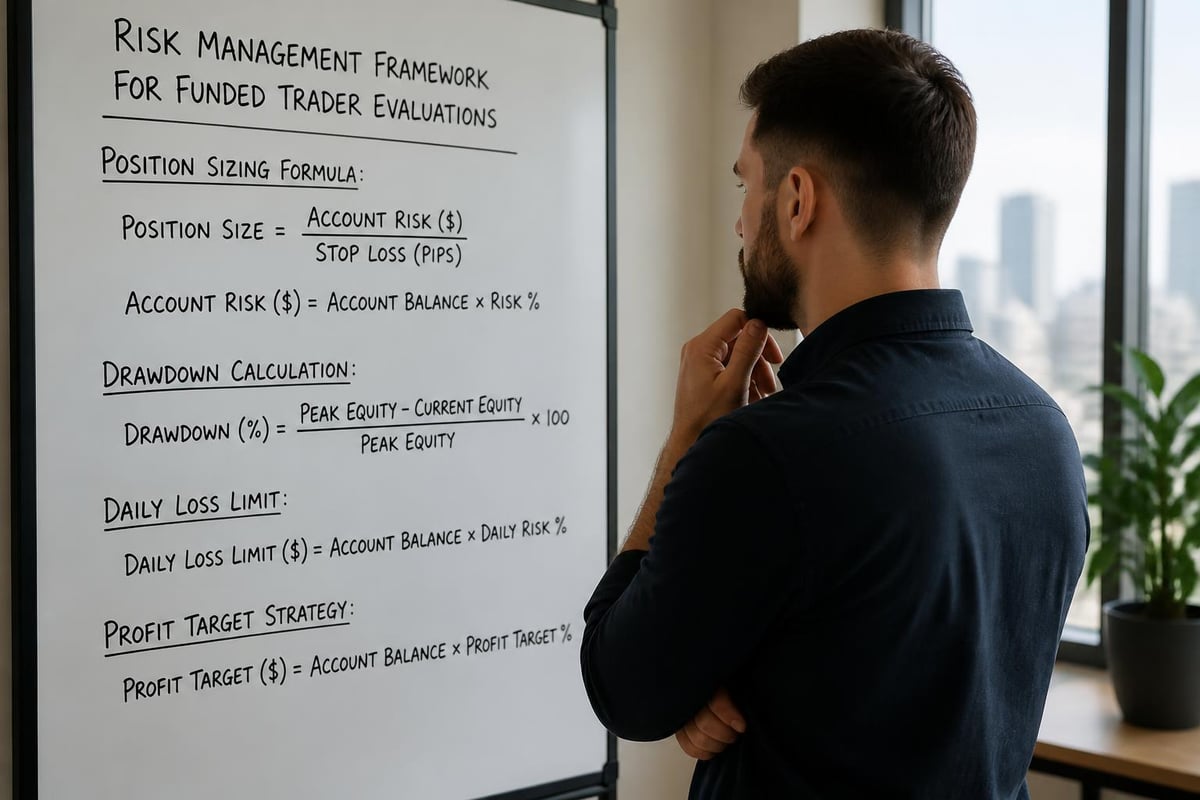
The primary differentiator between traders who pass evaluations and those who fail consistently centers on risk management discipline. Evaluation rules explicitly limit daily and overall drawdown, making conservative position sizing non-negotiable. Many experienced traders who typically risk 2-3% per trade must adjust to 0.5-1% risk levels to safely navigate evaluation constraints.
Position Sizing Calculations
Precise position sizing ensures compliance with drawdown limits while pursuing profit targets. Calculate maximum position size based on:
- Account size and maximum daily loss limit
- Distance from entry to stop loss in pips or points
- Currency pair pip value or contract specifications
- Buffer for potential slippage or gap risk
Mathematical precision in this area eliminates emotional decision-making and prevents rule violations that disqualify otherwise profitable traders.
Psychological Preparation and Trading Culture
The mental game separates passing traders from failing ones even when technical skills are comparable. Evaluation pressure creates emotional challenges that don't exist in demo trading or small personal accounts. Developing a professional trader's mindset involves embracing the culture of disciplined execution and treating every trade as business decision rather than entertainment.
Many successful funded traders cultivate their identity within the broader trading community. They surround themselves with resources, communities, and even apparel that reinforces their commitment to the profession. Physical reminders of trading principles and cultural connection help maintain focus during challenging evaluation periods.
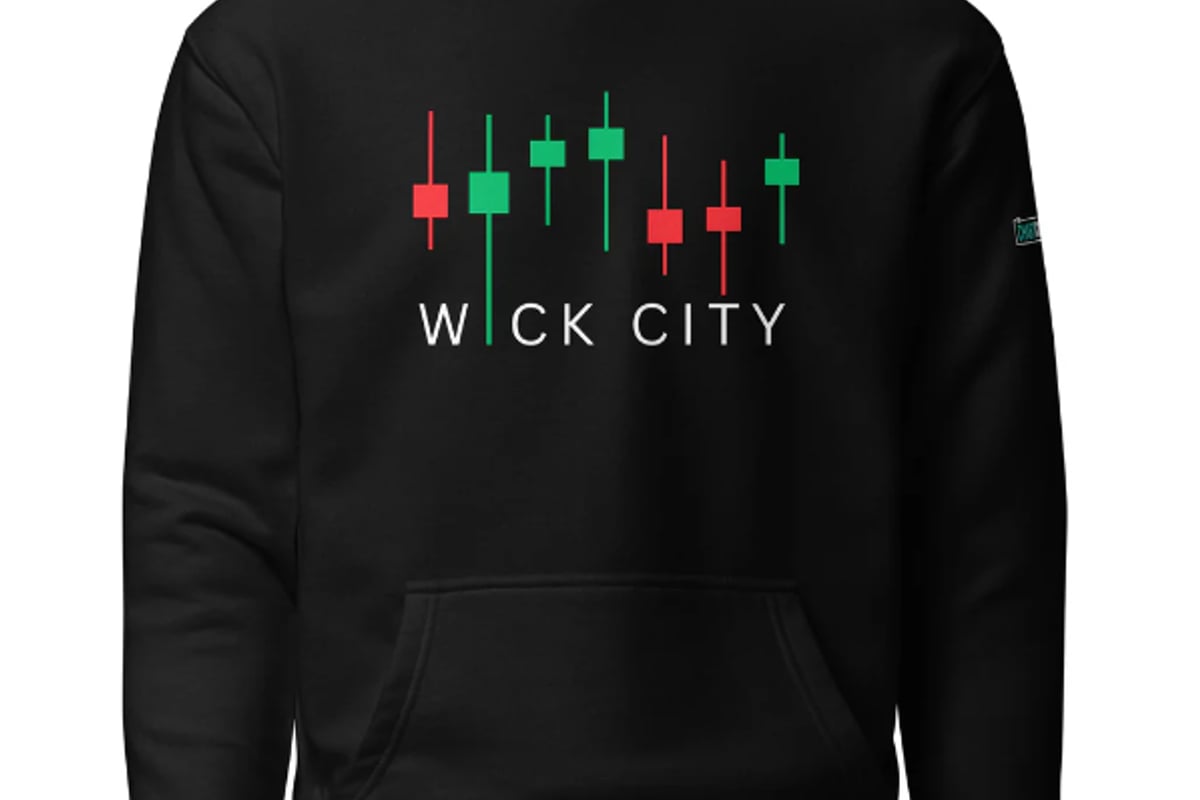
The Wick City - Candlestick Trading Hoodie has become popular among chart-focused traders who spend hours analyzing price action and candlestick patterns. Wearing gear that represents your trading approach serves as a constant reminder of the analytical discipline required for funded trader success.
Consistency Over Home Runs
Evaluation parameters typically require minimum trading days, preventing traders from hitting profit targets in one or two lucky trades and immediately withdrawing. This rule encourages the consistent, repeatable performance that firms seek in funded traders. Rather than swinging for massive gains, successful candidates demonstrate steady execution of their edge across multiple trading sessions.
Building consistency involves:
- Journaling every trade with setup, execution, and outcome details
- Reviewing performance metrics weekly to identify patterns
- Maintaining identical processes regardless of account balance
- Accepting small losses as business costs rather than personal failures
Managing Funded Trading Accounts
Receiving funded trader status marks the beginning rather than the end of the journey. Managing real capital with firm oversight requires continued discipline and often presents new psychological challenges distinct from evaluation trading.
Performance Expectations and Scaling
Most funded trader programs implement performance metrics that funded traders must maintain. While less restrictive than evaluation rules, these ongoing requirements ensure traders don't become complacent after receiving funding. Firms monitor consistency, drawdown management, and adherence to trading plans as indicators of long-term viability.
Scaling Opportunities
Top performers often qualify for account scaling, where successful funded traders receive increased capital allocations. Scaling criteria typically include:
- Consecutive profitable months without violations
- Maintaining drawdown below specified thresholds
- Meeting minimum activity requirements
- Demonstrating consistent risk management
Progressive scaling can transform a $50,000 funded account into six-figure allocations within months for exceptional traders. This growth potential represents one of the most compelling aspects of the funded trader model.
Withdrawal Processes and Financial Planning
Understanding payout schedules and withdrawal procedures prevents cash flow surprises. Most funded trader programs offer regular withdrawal windows, typically monthly or bi-weekly, with processing times ranging from a few days to several weeks. Some firms require minimum profit thresholds before first withdrawals, while others allow immediate profit extraction.
| Payout Feature | Standard Terms | Optimal Scenario |
|---|---|---|
| Frequency | Monthly/Bi-weekly | Bi-weekly options |
| Processing Time | 3-14 business days | Under 5 days |
| Minimum Threshold | $100-$500 first payout | No minimum |
| Split Percentage | 70-90% to trader | 85%+ split |
Financial planning for funded traders requires accounting for variable income streams and potential tax implications. Unlike salaried positions, funded trader earnings fluctuate based on market conditions and personal performance, necessitating careful budgeting and emergency fund maintenance.
Common Challenges and How to Overcome Them
Even skilled traders encounter obstacles when transitioning to the funded trader model. Understanding these common pitfalls and implementing preventive strategies increases success probability significantly.
Overtrading During Evaluations
The desire to reach profit targets quickly often leads traders to increase trade frequency beyond their tested strategy parameters. Overtrading generates commission costs, increases exposure to random market noise, and typically results in evaluation failures. Successful funded traders maintain their proven approach regardless of evaluation pressure.
Combat overtrading by:
- Setting maximum daily trade limits based on historical averages
- Requiring multiple confirmation signals before entries
- Taking mandatory breaks after consecutive losses
- Tracking trade quality metrics beyond simple win rates
Scaling Position Sizes Prematurely
As traders approach profit targets, the temptation to increase position sizes for faster completion becomes overwhelming. However, larger positions magnify both gains and losses, often triggering drawdown violations just before reaching funding. Maintaining consistent position sizing throughout evaluations protects against this common failure mode.
Neglecting Non-Trading Skill Development
Technical trading ability represents only one component of funded trader success. Administrative competencies, including record-keeping, tax preparation, and business organization, become increasingly important as funded traders scale their operations. Treating trading as a legitimate business rather than a hobby distinguishes professionals from perpetual amateurs.
Resources on understanding funded trading programs provide foundational knowledge for those new to this career path. Additionally, exploring comparison videos of top programs helps traders understand industry standards and identify outlier requirements.
Advanced Considerations for Professional Growth
Beyond passing evaluations and managing funded accounts, professional traders continuously develop their skills, diversify their income streams, and build sustainable long-term careers.
Multi-Account Strategies
Many successful funded traders operate multiple accounts across different firms, diversifying platform risk and increasing total capital allocation. This approach requires exceptional organizational skills and strict adherence to each firm's specific rules, but provides income stability and growth acceleration.
Managing multiple funded trader accounts involves:
- Maintaining separate journals for each account
- Tracking firm-specific rules and requirements
- Staggering evaluation attempts to prevent simultaneous failures
- Coordinating withdrawal schedules for consistent cash flow
Continuous Strategy Development
Market conditions evolve constantly, requiring funded traders to adapt their approaches while maintaining core principles. Successful professionals allocate time to backtesting new strategies, analyzing market regime changes, and refining existing methods. This continuous improvement mindset separates long-term professionals from traders who experience temporary success followed by gradual decline.
Academic research on adaptive trading frameworks demonstrates the importance of systematic strategy selection and portfolio optimization. While most funded traders focus on single-instrument approaches during evaluations, scaling into multi-strategy frameworks provides stability as capital allocations increase.
Building Trading Community Connections
Isolation represents one of the greatest challenges in trading careers. Connecting with other funded traders through forums, social media groups, and local meetups provides emotional support, strategy discussions, and accountability partnerships. These relationships prove invaluable during inevitable drawdown periods and performance plateaus.
The trading culture extends beyond charts and execution into lifestyle and identity. Many traders find value in trader-focused accessories and apparel that signal their commitment to the profession. These physical representations of trading identity help maintain focus and connect with like-minded individuals in both virtual and physical spaces.
Technology and Tools for Funded Traders
Proper technological infrastructure supports consistent execution and efficient analysis. While evaluation accounts typically require minimal additional tools, serious funded traders invest in systems that provide competitive advantages.
Essential Trading Technology
Hardware Requirements
Professional trading demands reliable equipment capable of running multiple platforms, charts, and analysis tools simultaneously. Minimum specifications include:
- Multi-core processor for rapid data processing
- 16GB+ RAM for simultaneous platform operation
- Multiple monitors for chart analysis and execution
- Uninterruptible power supply protecting against outages
- Reliable high-speed internet with backup connection
Software and Analysis Tools
Beyond basic trading platforms, funded traders utilize supplementary software for edge development and performance tracking. Common tools include:
- Backtesting platforms for strategy validation
- Trade journaling software tracking psychological and technical variables
- Economic calendar applications for fundamental analysis
- Custom indicators and automated alerts for setup identification
Data Management and Analysis
Successful funded traders treat their trading data as valuable business intelligence. Systematic collection, organization, and analysis of performance metrics reveal patterns invisible during real-time execution. Weekly and monthly review processes identify strengths to emphasize and weaknesses requiring correction.
Key performance indicators to track include:
- Win rate by setup type and market condition
- Average win versus average loss ratios
- Time-of-day performance variations
- Emotional state correlations with outcomes
Detailed independent program reviews often highlight data analysis capabilities and reporting features offered by different funded trader platforms. Some firms provide built-in analytics dashboards while others require traders to export data for external analysis.
The Future of Funded Trading
The funded trader industry continues evolving rapidly, with new firms launching regularly and established players refining their offerings. Understanding emerging trends helps traders position themselves advantageously for long-term success.
Industry Consolidation and Professionalization
As the funded trader market matures, industry consolidation appears inevitable. Smaller firms with unsustainable business models will likely exit the market while well-capitalized, professionally-managed firms expand their offerings. This consolidation benefits serious traders by eliminating questionable operators and establishing industry standards.
Technological Innovation
Automation and artificial intelligence increasingly influence funded trader programs. Some firms now incorporate algorithmic analysis of trader performance, identifying patterns that predict long-term success more accurately than simple profit targets. Future programs may implement adaptive evaluation parameters that adjust based on market volatility and individual trading styles.
Expanding Asset Classes and Markets
While forex and futures dominate current funded trader offerings, expansion into equities, options, and cryptocurrency markets continues. This diversification creates opportunities for specialists in various asset classes and enables multi-strategy approaches within single funded accounts.
The broader trading community, including those exploring various markets, benefits from resources available through platforms like The Chart Culture, which regularly publishes insights on trading culture, mindset development, and professional growth strategies.
The funded trader model has fundamentally changed how skilled individuals access professional trading capital, creating opportunities previously reserved for institutional traders or wealthy individuals. Success in this environment demands technical proficiency, disciplined risk management, and continuous personal development. Whether you're exploring your first evaluation or scaling multiple six-figure accounts, representing your commitment to trading excellence extends beyond the charts into your daily life and identity.
Explore how The Chart Culture helps traders showcase their passion through premium apparel designed specifically for those who live and breathe the markets.